Physical AI Is Taking Over the Real World but It Can’t Thrive Without Resilient Connectivity
Network Orchestration Is Powering the Physical AI Revolution
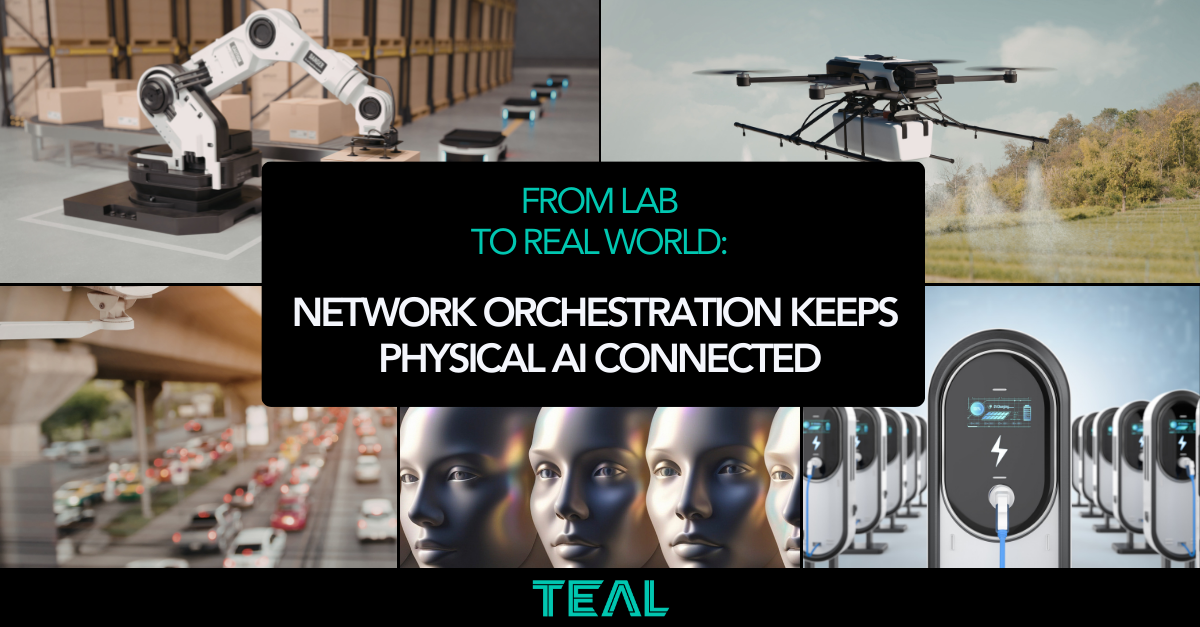
 Physical AI is moving out of labs and into the real world. From Waabi’s autonomous trucks to Starship Technologies’ sidewalk delivery robots, from quadrupeds like SPOT to humanoids like ATLAS, these systems are transforming logistics, warehouses, and infrastructure inspection. EV charging networks from companies like Autel and i-Charging are evolving alongside them to keep fleets powered and operational.
Even the smartest robots and autonomous systems can’t run without reliable connectivity. Physical AI depends on constant communication with cloud platforms, fleet management tools, and safety systems to stay safe and efficient. Our conversations with leading companies at CES 2026 made one thing clear: many deployments fail not because of hardware or algorithms, but because of poor connectivity. Downtime, delays, and frustration are the real obstacles to scaling autonomy.
The Explosive Market Opportunity
Morgan Stanley estimates that humanoid robots alone could become a $5 trillion market by 2050, with potentially 1 billion humanoids deployed globally. Even more ambitious projections from Citi GPS predict 1.3 billion AI robots in use by 2035, scaling to 4 billion by 2050.
This growth extends beyond hardware sales. The Robots-as-a-Service (RaaS) model has already reached $2 billion annually with 17% growth rates, making advanced robotics accessible to companies seeking automation benefits without massive capital expenditure. The stakes are enormous. With the AI robotics market projected to grow from $12.8 billion in 2023 to nearly $125 billion by 2030, companies that solve the connectivity challenge will capture the lion’s share of this explosive growth.
Physical AI in Action Across Industries
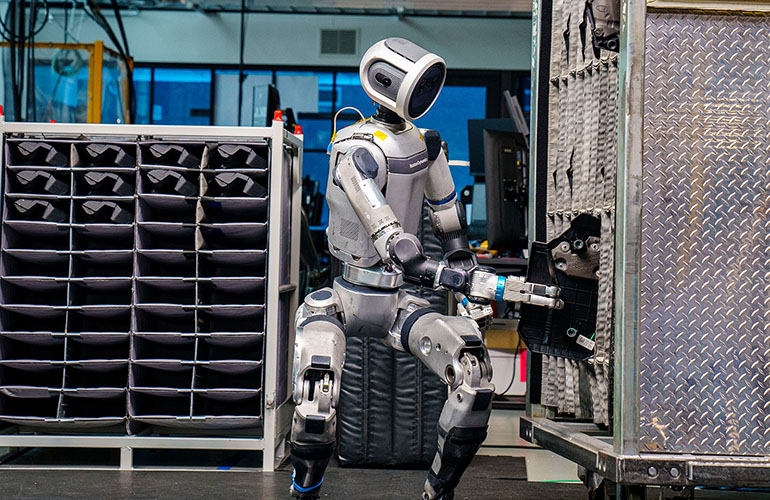 Real‑world deployments prove it. Hyundai Motor Group plans to integrate Boston Dynamics’ Atlas humanoid robots into its global manufacturing network. with phased deployment starting at its U.S. plant in Georgia beginning in 2028 for parts sequencing and expanding to assembly tasks by 2030. Hyundai plans to build 30,000 robots per year at a U.S. factory, and said it “expects humanoids to become the largest segment of the Physical AI market in the future and has set a goal to mass-produce the Atlas product model, deploying units at scale across industrial sites as production-ready humanoid robots.”, illustrating how physical AI is moving from lab demos into real industrial use. Other use cases include:
 Autonomous Delivery Systems: Companies like Starship Technologies and Serve Robotics operate thousands of robots across multiple countries, delivering food and packages. These systems navigate sidewalks, cross streets, and avoid obstacles while maintaining constant communication with dispatch, mapping, and safety monitoring platforms. Autonomous self-driving vehicle technologies like Bot Auto, AVRIDE, and Waabi are transforming transportation and logistics.
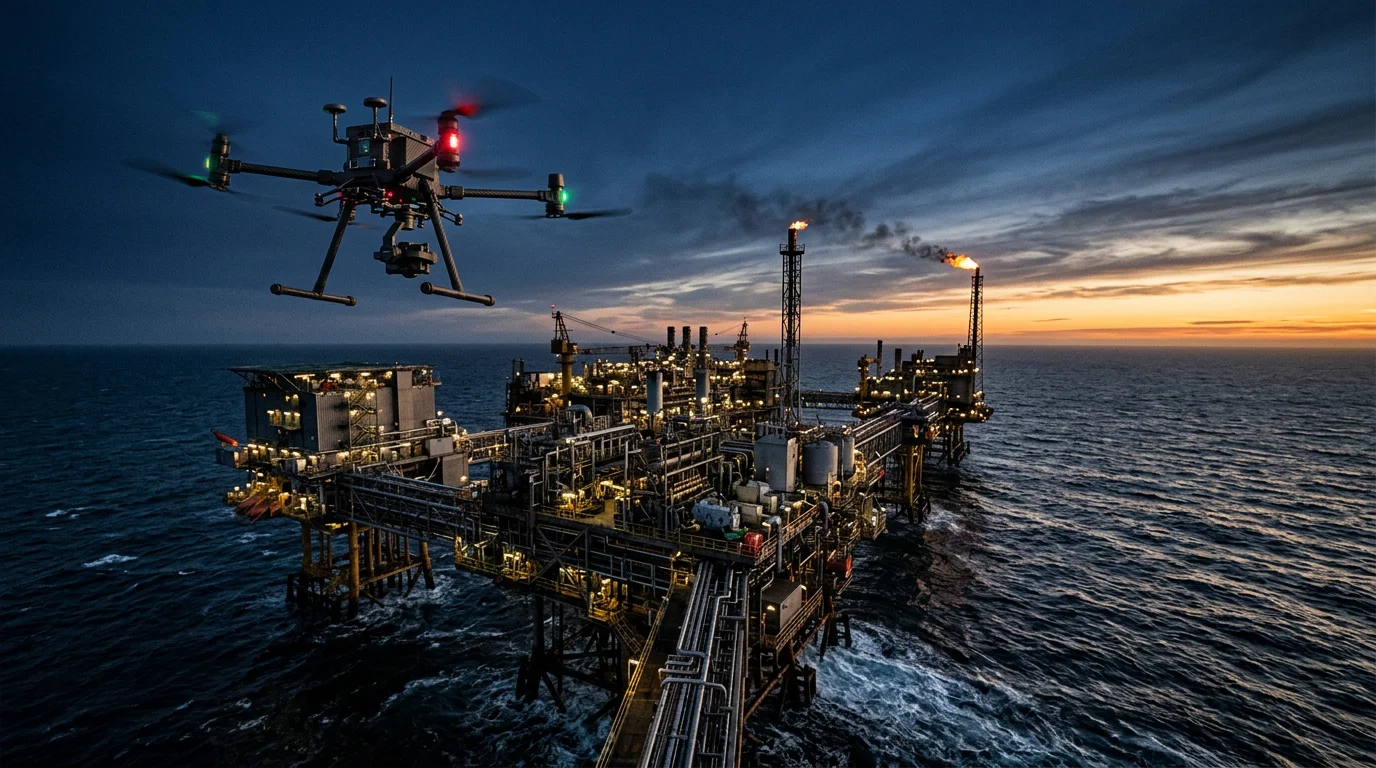
Infrastructure Inspection Drones: Drones autonomously monitor power lines, wind turbines, solar fields and pipelines across vast areas, uploading high-resolution imagery and sensor data to cloud-based analysis platforms for faster, more accurate issue detection.
Agricultural Robotics: Machines like Carbon Robotics are using computer vision and machine learning identify crops, and apply treatments with precision. Companies like AquaSpy are helping to monitor soil and plant health, and other technologies are relying on cloud-based disease databases and weather prediction models to optimize decisions.
Healthcare Assistance Robots: Deployed in hospitals and eldercare facilities, these robots support patient care, medication delivery, and mobility while maintaining secure connections to electronic health records and complying with strict data protection regulations.
The Connectivity Challenge
Physical AI systems face unique connectivity challenges that standard internet solutions cannot address:
-
Geographic Mobility: Autonomous systems move across coverage areas, cross carrier boundaries, and operate where Wi-Fi is unavailable.
-
Mission-Critical Reliability: Connectivity failure can mean the difference between safe operation and dangerous malfunction. Emergency stop commands, manual overrides, and incident reporting all depend on reliable communication channels.
-
Massive Data Requirements: A single autonomous vehicle can generate over 4 terabytes of data daily, all of which must be continuously uploaded for real-time processing.
-
Global Deployment Scalability: Expanding internationally requires managing connectivity across carriers, regulations, and network technologies. Traditional solutions demand extensive local integration and partnerships.
-
Security and Compliance: Autonomous systems often operate in sensitive environments or handle valuable cargo, requiring encrypted communications, enterprise-grade security, and audit trails.
Cellular Connectivity: The Game-Changer
4G/LTE and 5G networks provide capabilities that align perfectly with Physical AI requirements:
-
Ultra-Low Latency: 5G enables real-time decision-making with latency as low as 1–5 milliseconds.
-
Massive IoT Connectivity: Supports dense deployments with up to 1 million devices per square kilometer.
-
Network Slicing: Dedicated segments ensure guaranteed bandwidth and reliability.
-
Edge Computing Integration: Reduces the need to send all data to distant clouds, improving speed and responsiveness.
-
Enhanced Coverage: Better signal penetration in urban, underground, and remote environments.
TEAL’s Network Orchestration Service: Purpose-Built for Physical AI
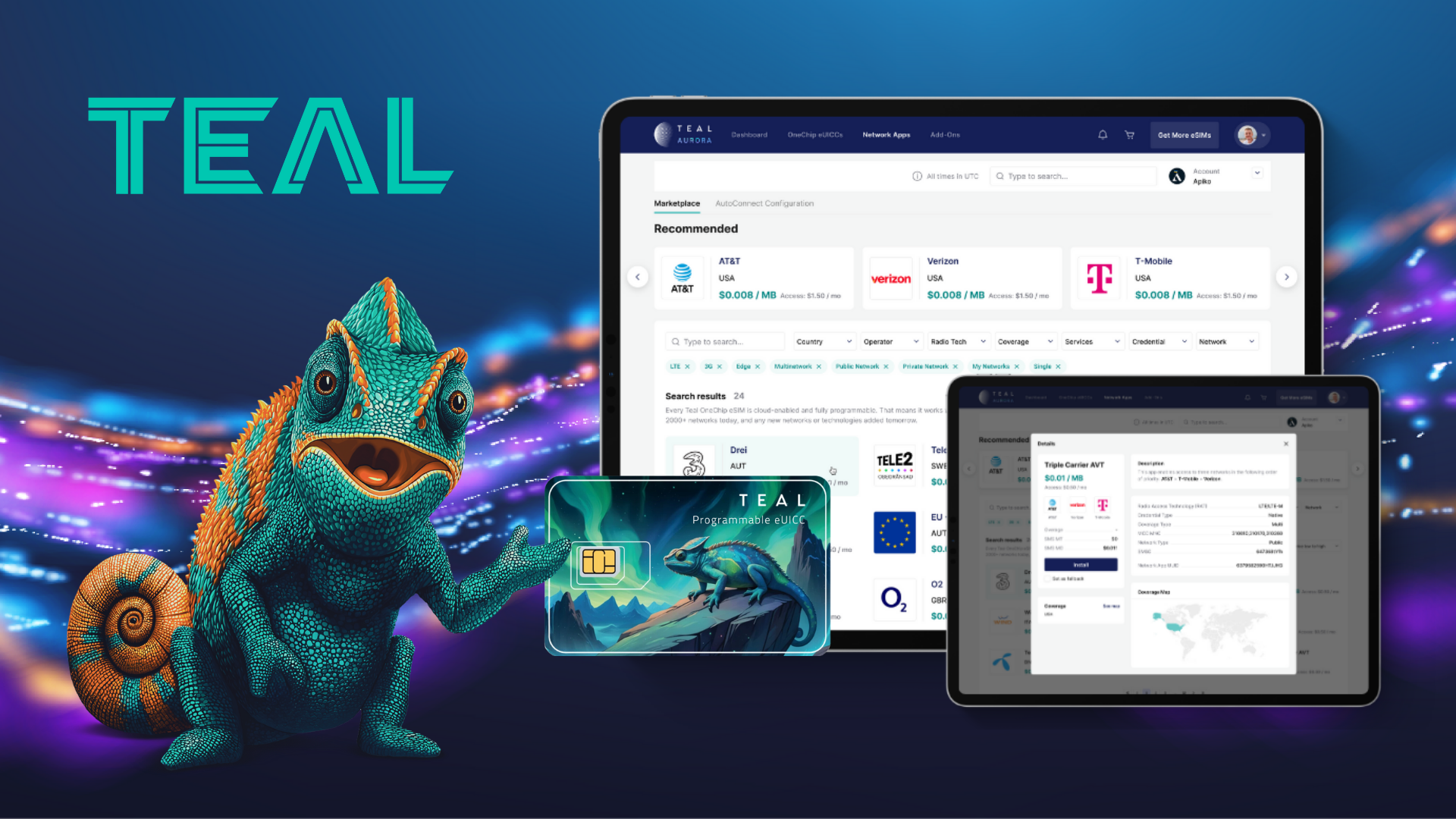
TEAL’s NOS platform solves the connectivity challenges of scaling autonomous systems:
-
Intelligent Multi-Carrier Management: Dynamically selects the best network based on signal strength, latency, and cost.
-
Global eSIM Technology: Switch networks over-the-air without touching hardware. Supports SGP.02 and SGP.32.
-
Real-Time Fleet Monitoring: Track connectivity, usage, and performance across your entire fleet.
-
Enterprise Security: Encryption and protocols to protect sensitive data and maintain compliance.
-
Scalable Architecture: Supports fleets of any size without additional infrastructure overhead.
Success Stories
Starship Technologies, the global leader in autonomous delivery robots, partnered with TEAL to solve critical connectivity challenges as they scaled operations across multiple countries. Our Network Orchestration Service enabled their robots to maintain reliable connections while navigating complex urban environments, resulting in improved delivery success rates and reduced operational costs.
The results speak for themselves: enhanced uptime, seamless international expansion, and the ability to focus engineering resources on core robotics innovation rather than connectivity management.
The Path Forward
The wave of Physical AI is here. The question is not if it will transform industries but whether your company will lead that transformation. Reliable connectivity is the foundation. Without it, autonomy stops.
Book a free consultation with TEAL today and ensure your systems stay connected, coordinated, and operational.