Meet the Autonomous Lawn Robots Taking Lawn Care Off Your To-Do List
For generations, mowing the lawn has been a time-consuming chore. Whether it meant sweating behind a push mower or scheduling weekly landscaping visits, lawn care has rarely been effortless. That is changing fast.
Robotic lawn mowers, often called lawnbots, are redefining how lawns are maintained. These autonomous machines combine smart navigation, connected software, and electric power to deliver consistent, hands-free lawn care for homeowners and commercial operators alike. And their rapid evolution is now on full display at events like CES, where robotics and outdoor tech are colliding in impressive ways.
But autonomy only works if these machines stay connected. A lawnbot that cannot reliably reach the cloud cannot receive updates, report issues, or be monitored in real time. That is where resilient connectivity becomes just as important as blades and sensors.
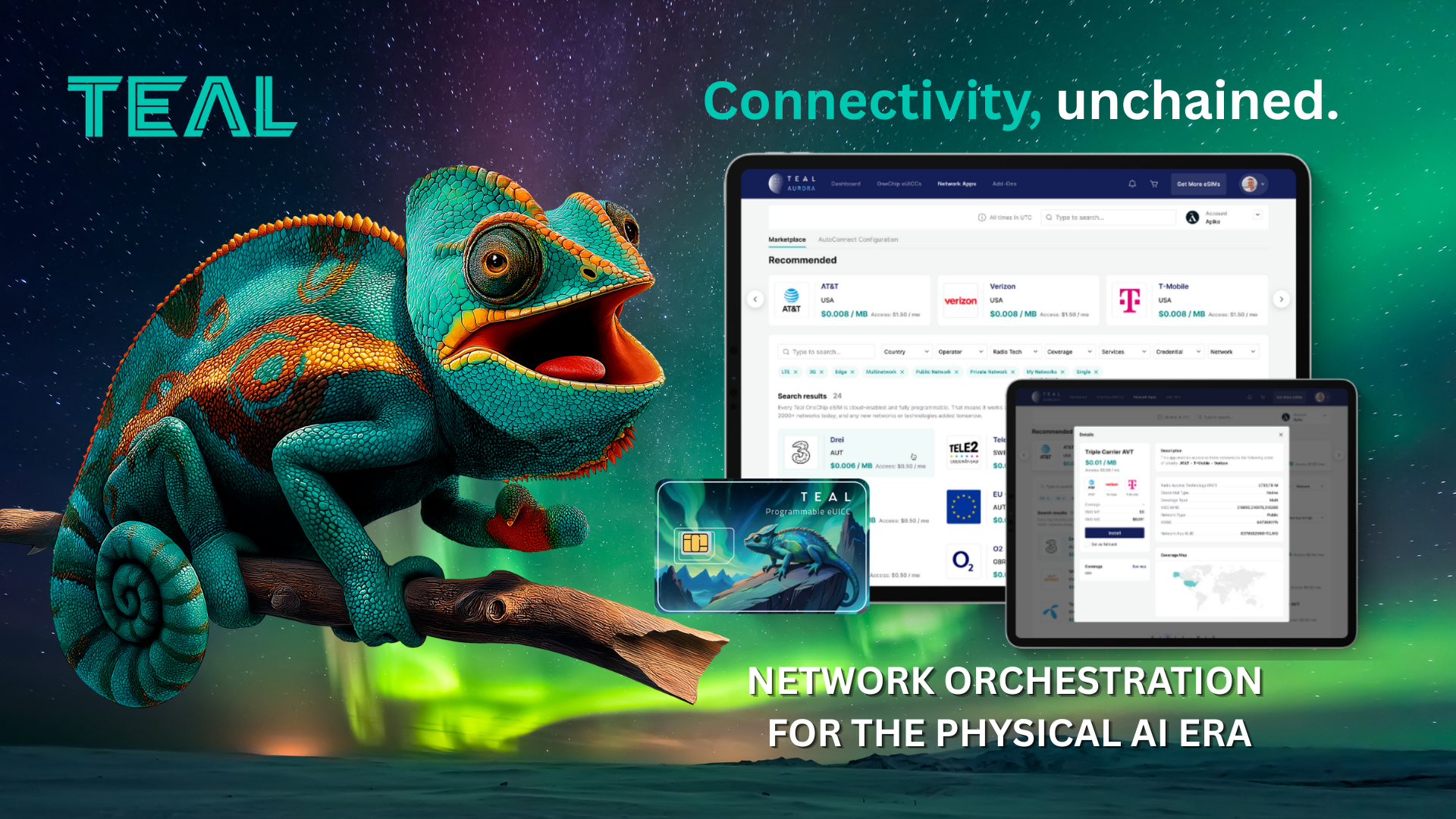
This is why leading robotic mower brands rely on TEAL’s Network Orchestration Service (NOS) to keep their fleets online, even as they move between properties, regions, and networks.
Why Lawnbots Are Gaining Momentum
Autonomous lawn mowers are growing in popularity because they solve real problems for real people.
They offer true hands-off operation. Set a schedule and let the mower work without constant supervision.
They use advanced navigation systems like GPS, LiDAR, cameras, and sensors to map yards and avoid obstacles.
They stay connected through cellular or Wi-Fi networks so owners can monitor and manage them remotely.
They scale from backyard lawns to large commercial properties like campuses, parks, and solar fields.
As these systems improve, mowing shifts from a manual task to an automated service that runs quietly in the background.
And as they scale, connectivity becomes harder. A mower deployed across thousands of sites may encounter weak coverage, congested networks, or roaming challenges. Without orchestration, a single network failure can mean a mower that stops reporting in or stops working altogether.
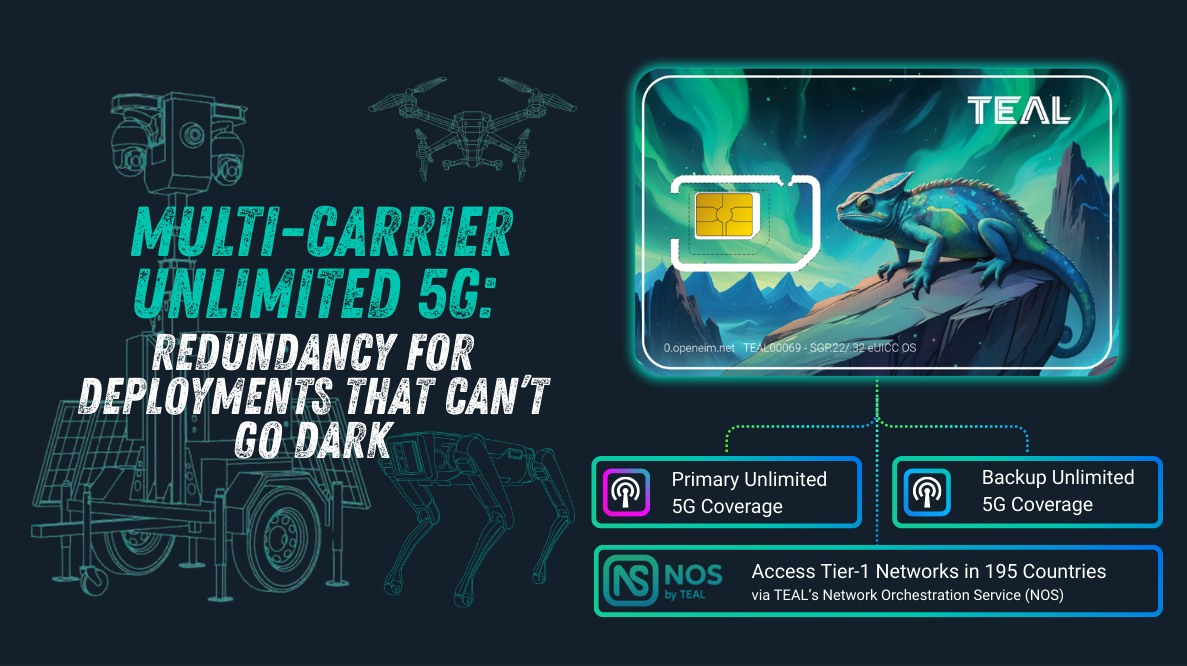
TEAL’s Network Orchestration Service solves this by dynamically managing connectivity across multiple carrier networks. Instead of locking a lawnbot into a single operator, NOS intelligently selects the best available network based on location, performance, and policy. The result is fewer disconnects, faster recovery, and more uptime in the field.
Proven Lawnbot Leaders
Several robotic mowers already demonstrate how far the technology has come.
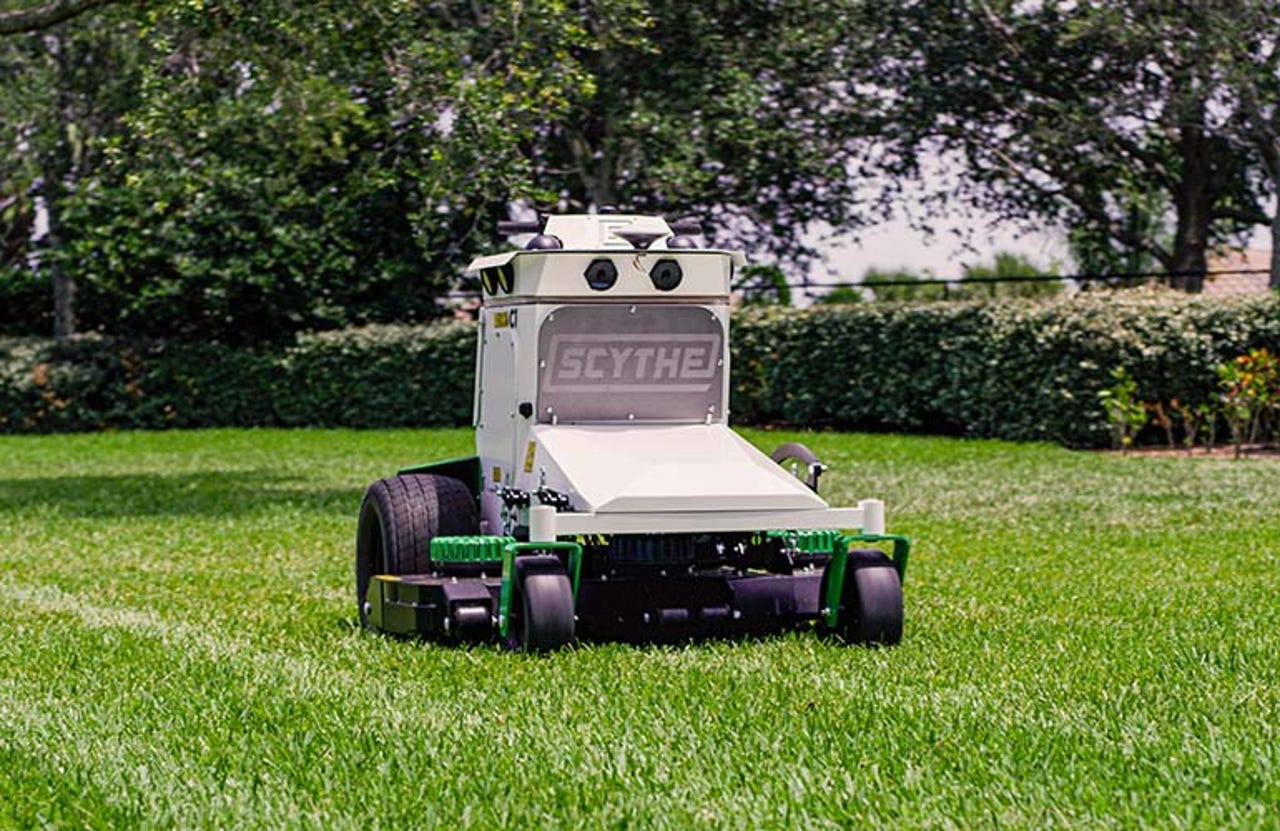
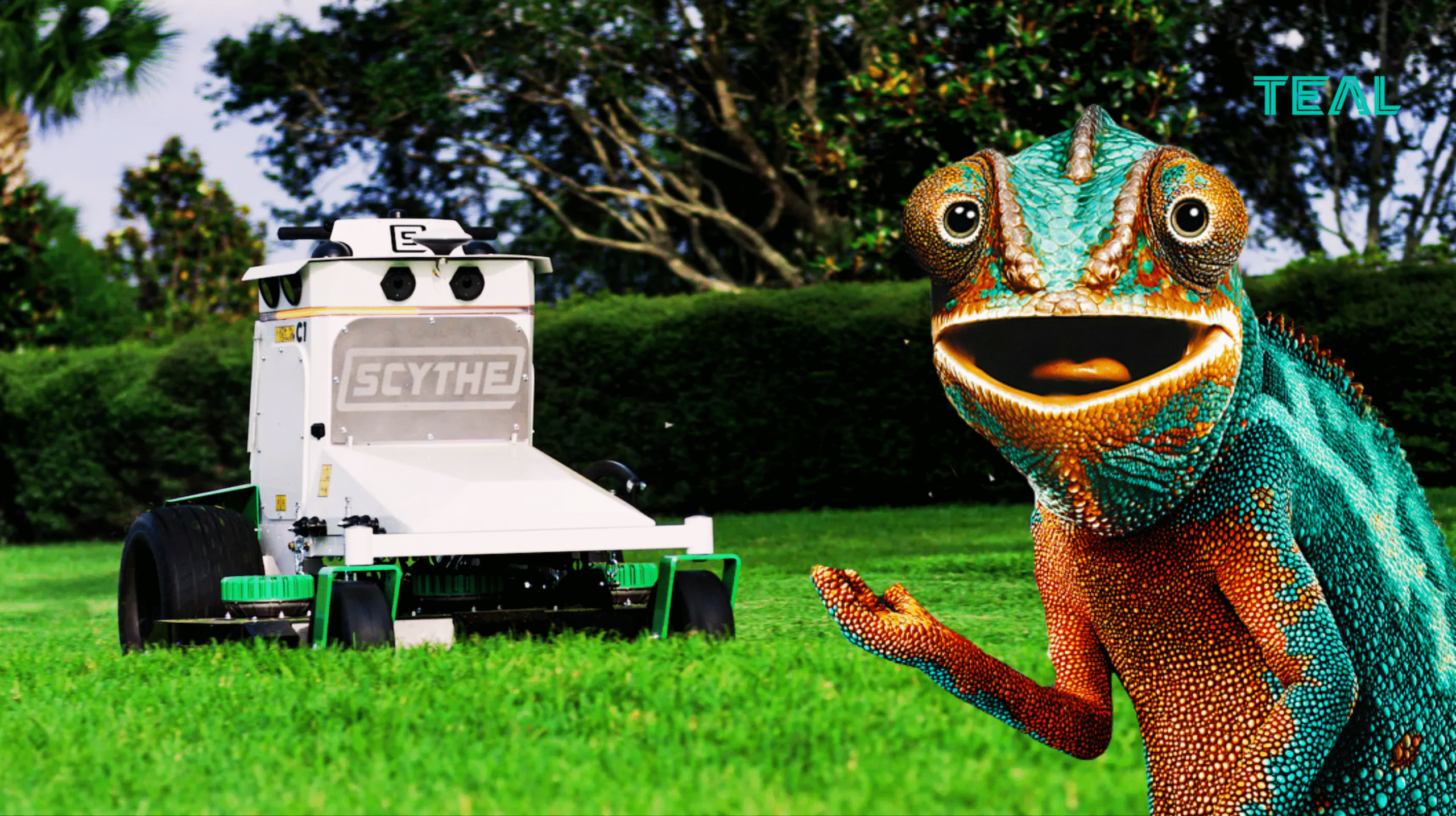
Scythe Robotics builds commercial-grade autonomous mowers designed for large properties. Their systems use GPS navigation and cellular connectivity to operate reliably at scale.
Graze Robotics focuses on precision and consistency, making their robots ideal for areas like airports and golf courses where appearance matters.
 URS Robot Nexmow blends AI navigation with a clean design that eliminates the need for physical perimeter wires.
EcoFlow Blade expands beyond mowing by offering trimming and debris collection in one machine, creating a more complete lawn care solution.
Echo Robotics uses advanced scanning and automation to help its machines navigate complex environments with minimal setup.
FireFly’s autonomous lawnmowers are advanced robotic turf-cutting machines designed for large-scale, professional use like sports fields, golf courses and turf farms. They use GPS, LiDAR and intelligent path planning to mow without a driver, significantly cutting labor and fuel costs while maintaining precise, high-quality cuts.
Optimow’s AI Robotic Mower is built for durability and weather resistance while offering GPS-based navigation and efficient cutting.
These companies laid the groundwork for the lawnbots now entering the mainstream. Many of today’s leading brands are also investing heavily in connected operations, from fleet dashboards to over-the-air updates. That shift makes network reliability a core part of the product experience.
With TEAL NOS, manufacturers gain a single platform to manage connectivity across every mower they deploy. They can monitor performance, set network policies, and avoid the operational complexity of juggling multiple SIM vendors and carrier contracts.
The New Generation of Lawnbots at CES
Recent CES showcases revealed how quickly robotic lawn care is advancing.
 Segway Navimow continues to push wire-free mowing using satellite positioning and intelligent route planning. Its consumer-focused design makes autonomous mowing approachable for homeowners.
John Deere brought autonomy to commercial mowing with an electric robotic mower equipped with stereo cameras and terrain mapping. It shows how established equipment brands are embracing robotics.
Sunseeker Robotics introduced the S4, a LiDAR-powered mower recognized as a CES Innovation Awards honoree. Its ability to operate without boundary wires signals a major shift in ease of deployment.
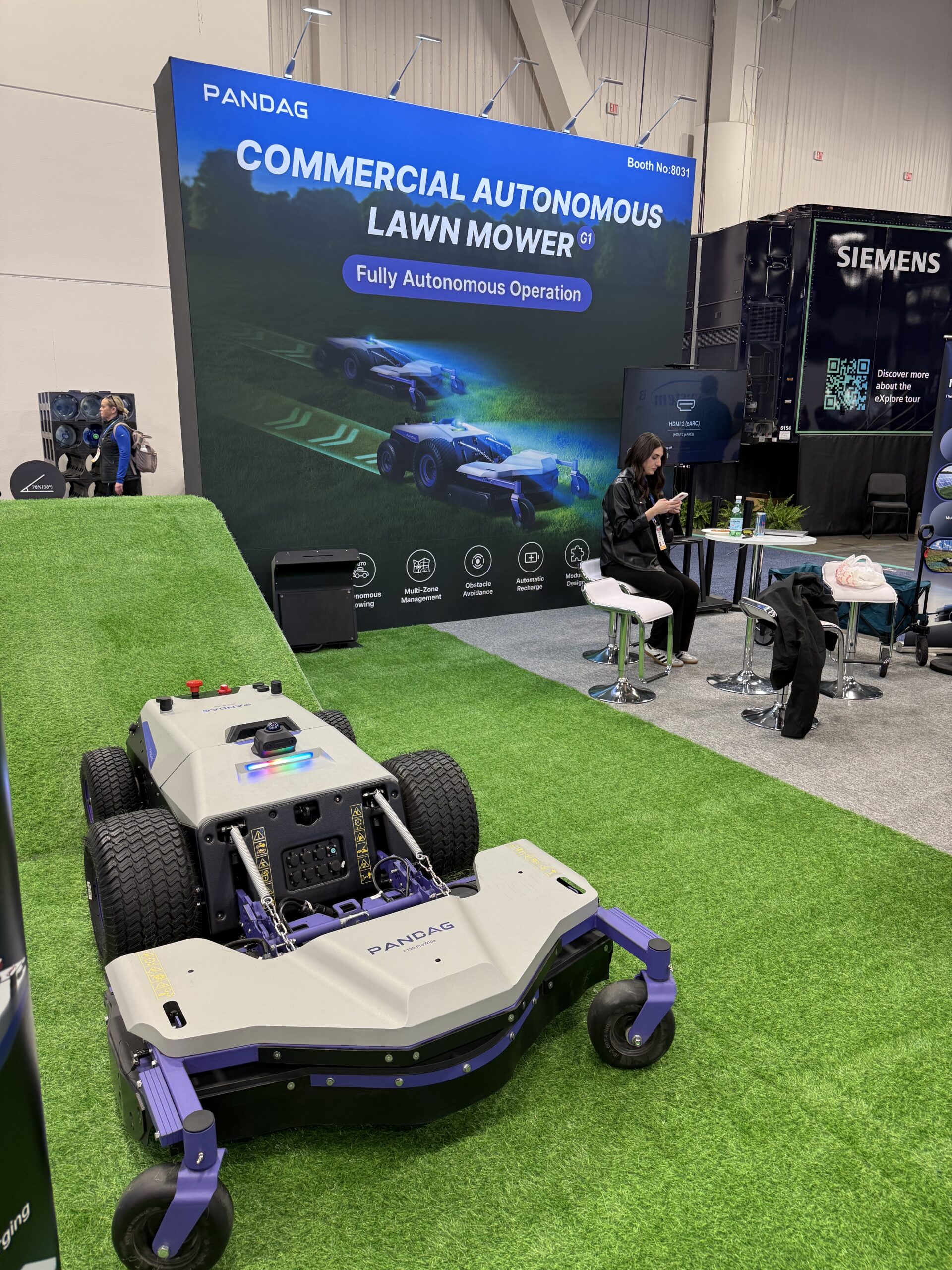 PANDAG unveiled the G1 commercial autonomous mower, combining RTK positioning, AI vision, and cellular connectivity for large-scale operations. It is designed to handle acres of land with minimal human input.
Litheli showcased robotic mowers that use AI vision for object detection and multi-zone lawn management, targeting smart home users who want simple setup and reliable results.
Together, these machines show that robotic mowing is moving beyond novelty and into practical, everyday use.
Behind the scenes, they also highlight a growing dependency on reliable mobile connectivity. Without consistent network access, features like remote control, fleet optimization, and predictive maintenance cannot function as intended.
This is exactly the environment NOS was built for. TEAL enables lawnbot manufacturers to ship devices with a single global eSIM profile while orchestrating network behavior in real time. If one carrier underperforms in a given area, the system can switch to another network. That keeps machines cutting instead of disconnecting.
What This Means for Lawn Care
Autonomous mowing changes the experience for both homeowners and professionals.
Homeowners get consistently cut lawns without giving up weekends or paying for frequent service visits.
Landscaping companies can deploy fleets of robotic mowers to increase coverage without increasing labor costs.
Smart connectivity allows predictive maintenance, remote troubleshooting, and real-time performance tracking.
For manufacturers and operators, connectivity is now part of product reliability. A mower that loses signal is not just offline. It is blind to updates, invisible to support teams, and at risk of downtime.
With TEAL’s NOS, connectivity becomes programmable. Operators can prioritize uptime, control roaming behavior, and ensure their robots stay connected wherever they are deployed. This turns connectivity from a fragile dependency into a competitive advantage.
Looking Ahead
From established names like Segway Navimow to emerging innovators like Sunseeker Robotics and PANDAG, lawnbots are redefining what lawn care looks like. The machines on display today show that autonomy, connectivity, and reliability are no longer optional features. They are the new baseline.
As fleets grow and deployments expand across regions, the winners will be the companies that treat connectivity as a core system, not an afterthought.
The result is simple. Less time pushing mowers. More time enjoying the lawn.
Lawnbots are not just cutting grass. With the help of intelligent connectivity from TEAL, they are cutting lawn care off the to-do list.
Traditional connectivity solutions are broken. Rigid contracts, carrier lock-in, coverage gaps, and costly SIM logistics are holding your business back. It’s time to break free.
Schedule a meeting with a TEAL expert and find how we can help your business.