The Sky is the New Cell Tower: Satellites Are Reshaping the MNO Landscape
For decades, the definition of a Mobile Network Operator (MNO) has remained fairly static. We think of companies with vast portfolios of spectrum licenses, thousands of steel towers dotting the landscape, and retail stores in every shopping mall. You buy a SIM, pop it in your device, and connect to a terrestrial network.
But that definition is rapidly expiring. The next generation of carriers isn’t just looking at the ground; they are looking up.
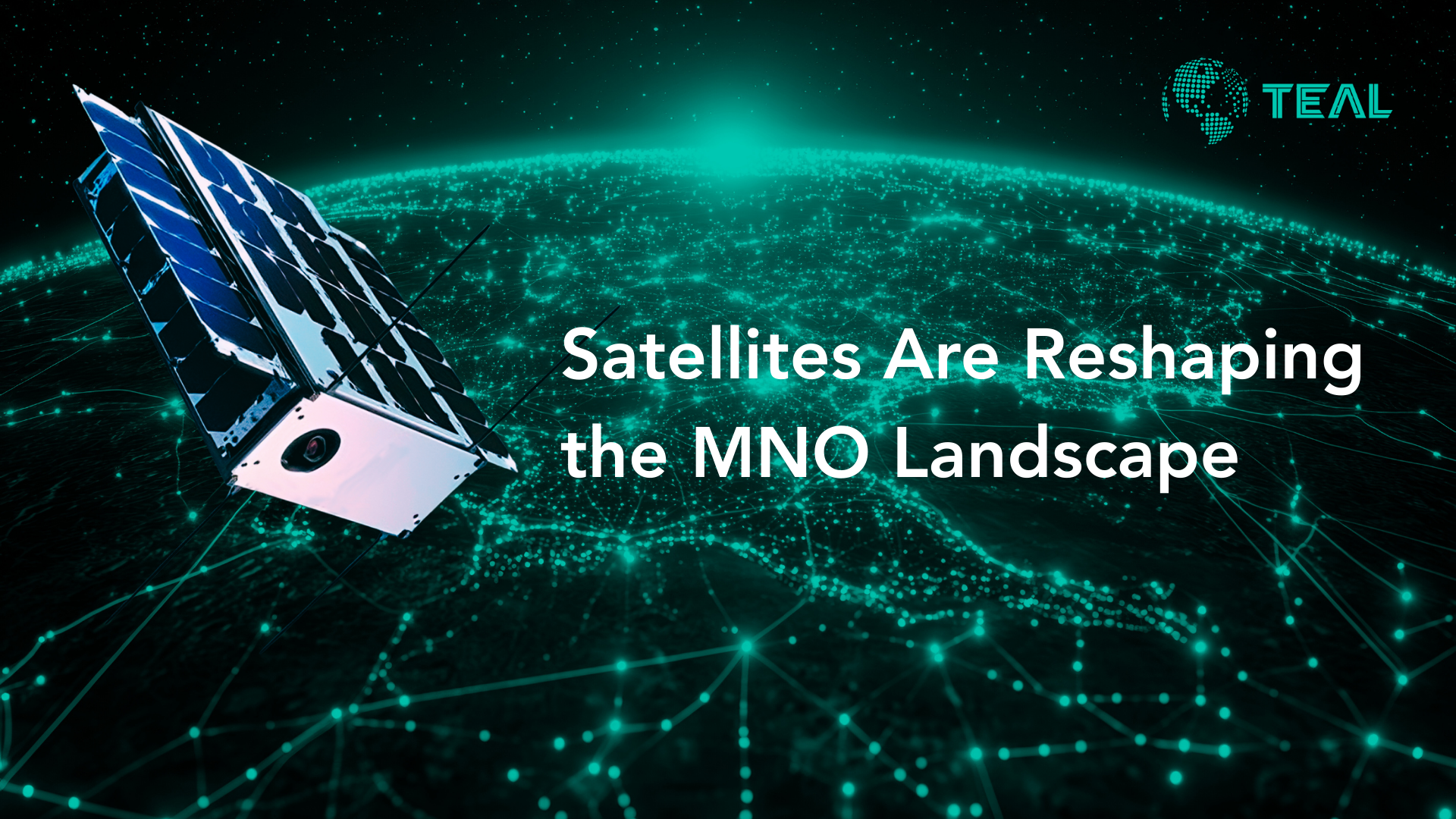
We are witnessing a fundamental shift in telecommunications where satellite companies are moving beyond their traditional role as wholesale backhaul providers. They are positioning themselves to become standalone MNOs, offering direct-to-device connectivity that rivals and complements traditional cellular networks.
The implications for IoT, logistics, and global enterprise are massive. As the lines between terrestrial and non-terrestrial networks (NTN) blur, businesses need to prepare for a future where connectivity isn’t limited by geography.
The Evidence: Space is Open for Business
While the concept of satellite phones isn’t new, the business model behind them is changing. Historically, satellite connectivity required proprietary, brick-sized hardware and expensive, specialized plans. Today, Low Earth Orbit (LEO) satellite providers are building infrastructure that speaks the native language of standard mobile devices: 3GPP.
This shift signals that satellite players are ready to compete directly in the retail mobile service territory.
SpaceX is Building the Full Stack
SpaceX offers the clearest example of this evolution. While they have partnered with carriers like T-Mobile for coverage extensions, their recent moves suggest ambitions to operate independently.
Three key developments confirm this trajectory:
- The “Starlink Mobile” Trademark: On October 16, 2025, a trademark application was filed for “STARLINK MOBILE.” The scope is telling. It covers “wireless mobile telephone calling, data and messaging service plans.” This goes far beyond wholesale infrastructure; this is the language of a retail service provider capable of managing subscribers directly.
- Spectrum Acquisition: In September 2025, SpaceX acquired 50MHz of wireless spectrum from EchoStar for $17 billion. Crucially, this included AWS-4 spectrum, which is used for terrestrial LTE and 5G. This gives them the ability to operate a hybrid network—using satellites for wide-area coverage and ground-based spectrum for capacity in dense areas.
- Network Identity (MCC-MNC): Perhaps the most technical but significant smoking gun is the assignment of Mobile Country Code and Mobile Network Code 901-08 by the ITU. Every mobile network needs these codes to issue SIMs and handle billing. The “901” prefix is reserved for global services, signaling a network designed to operate transnationally without being tied to a single country’s borders.
The Competition is Heating Up
SpaceX is not acting in a vacuum. The race to the sky is crowded with major players establishing the infrastructure to serve as next-gen MNOs.
Iridium continues to accelerate its direct-to-device capabilities. Their recent acceptance into 3GPP standards is a critical milestone. It ensures that their satellite network can communicate with standard commercial devices, removing the hardware barrier that previously limited satellite adoption to niche markets.
Globalstar has leveraged strategic partnerships to bring satellite connectivity to mass-market consumer devices. By integrating their network directly into smartphone ecosystems, they are normalizing the idea that your phone should work even when the cell tower is miles out of range.
One example is Globalstar’s strategic partnerships is its collaboration with Apple. Through this partnership, Apple integrated Globalstar’s satellite technology into the iPhone 14 series, enabling the Emergency SOS via satellite feature. Apple’s emergency satellite feature, powered by Globalstar’s network, enables users to send critical messages without cellular or Wi-Fi coverage. This innovative solution bridges connectivity gaps, offering a life-saving option in remote or disaster-stricken areas and showcasing the practical impact of satellite technology in consumer devices.
Amazon’s Project Kuiper is also aggressively building out its ground and space infrastructure. With massive facilities in Florida dedicated to satellite processing, Amazon is laying the groundwork to compete in the broadband and connectivity space, potentially offering another layer of mesh connectivity for global enterprises.
The Future is a Hybrid Network
So, what does this mean for your business? It means the era of “dead zones” is ending, but the era of network complexity is just beginning.
The future of connectivity will not be solely cellular, nor will it be solely satellite. It will be a blend. We are moving toward a hybrid model where devices seamlessly roam between terrestrial towers and overhead satellites depending on availability and congestion.
For a logistics company, this means a truck driving through a rural dead zone automatically switches to a satellite link without dropping its telemetry stream. For maritime operations, it means having a single network identity that functions in the port and on the open ocean. For drones it means leveraging satellite or cellular connectivity depending on the mission.
However, this opportunity creates a management challenge. If every satellite company becomes its own MNO, businesses could face a fragmented landscape. Managing separate contracts, SIMs, profiles, and billing cycles for terrestrial carriers (like Verizon or T-Mobile) and non-terrestrial carriers (like Starlink or Iridium) is administratively unsustainable.
Orchestrating the Chaos with TEAL
As these satellite giants transform into MNOs, the need for a unified control plane becomes undeniable. You shouldn’t have to manually swap SIM cards or manage different connectivity vendors just because your asset moved from a city center to a remote mining site.
This is where TEAL’s Network Orchestration Service (NOS) changes the game.
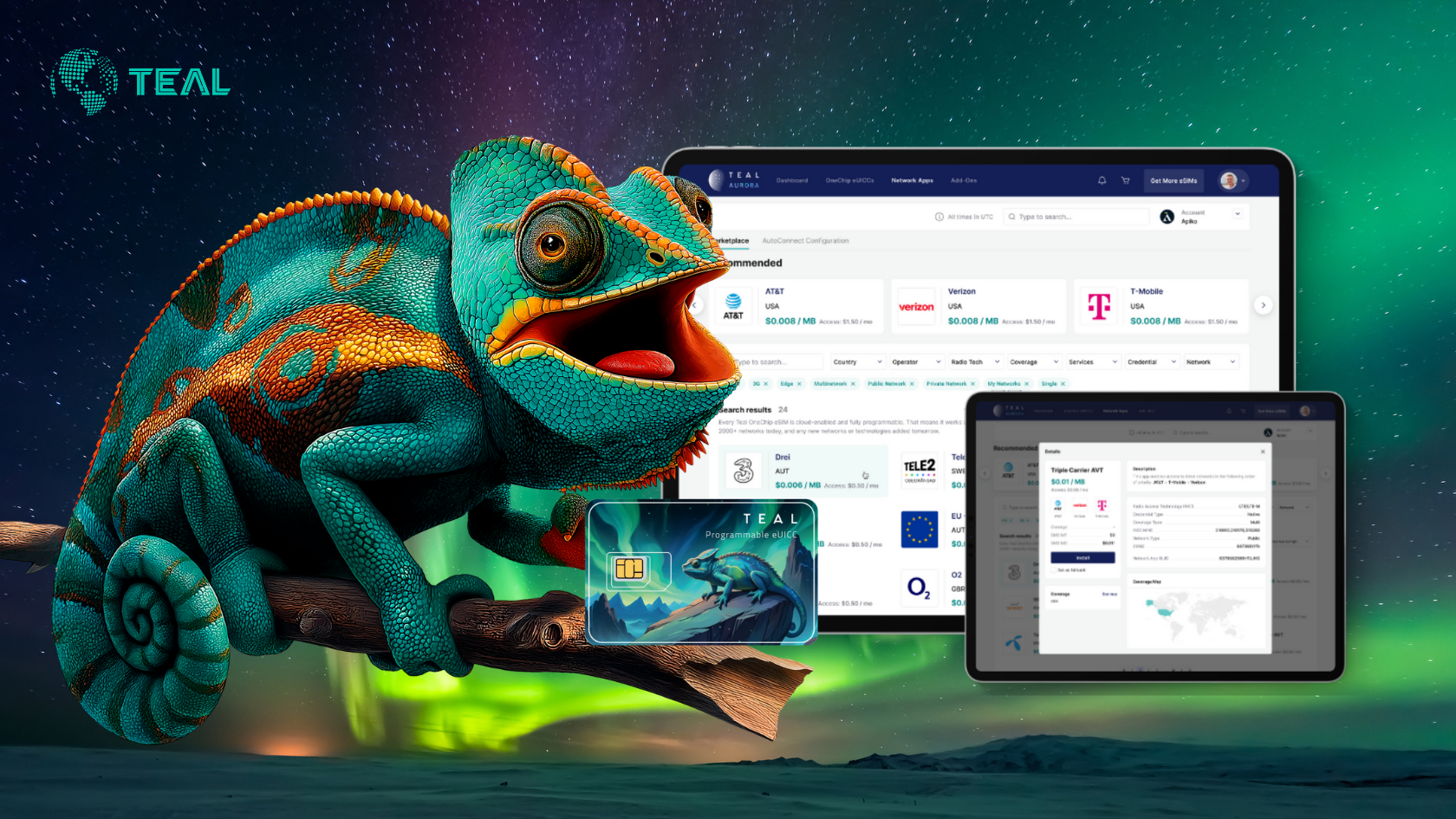
We are building the infrastructure to make switching between cellular and satellite a reality, all within a single interface – the Aurora Connectivity Dashboard. TEAL’s technology is designed to handle the complexity of these underlying networks.
Through our Aurora connectivity dashboard, businesses can view and manage their device connectivity across multiple technologies. We are actively working toward a future where you can provision a terrestrial profile for urban operations and seamlessly switch that same eSIM to a satellite profile when the device enters a remote area.
Why Network Orchestration Matters
- Unified Visibility and Control: TEAL provides you with full control over your network connectivity, allowing you to manage and optimize your connections based on your unique requirements. With granular visibility into network performance and customizable settings, you can fine-tune your operations for maximum efficiency.
- Seamless Flexibility and Adaptation: Effortlessly switch between satellite and cellular networks for uninterrupted connectivity, with programmable capabilities to adapt automatically to changing conditions, costs, or signal quality—empowering dynamic, hassle-free management without manual intervention.
- Future-Proof Provider Independence: As new satellite MNOs come online (like Starlink Mobile or Kuiper), a network orchestrator allows you to integrate these new technologies without ripping and replacing your hardware.
Prepare for Vertical Connectivity.
The telecommunications industry is undergoing a major architectural shift. The distinction between “satellite provider” and “cellular carrier” is evaporating.
Companies like SpaceX are proving they have the spectrum, the regulatory approval, and the hardware to be your next carrier. But simply having access to these networks isn’t enough, you need the ability to manage them efficiently.
The future is a seamless blend of earth and sky. Ensure your business has the orchestration tools to navigate it.
If you are ready to explore how TEAL’s Network Orchestration Service (NOS) can simplify your global connectivity strategy, book a meeting with one of our experts below:
Book a Meeting